
Quick Reference Beginner Essential
First 1–3 seasons of kayak fishing
Wrong kayak for Oklahoma water types
No PFD, no float plan, big water
Ignoring Oklahoma afternoon wind
Check ODWC fishing report before you drive
Overspending on gear before knowing what you need
Last updated: May 8, 2026
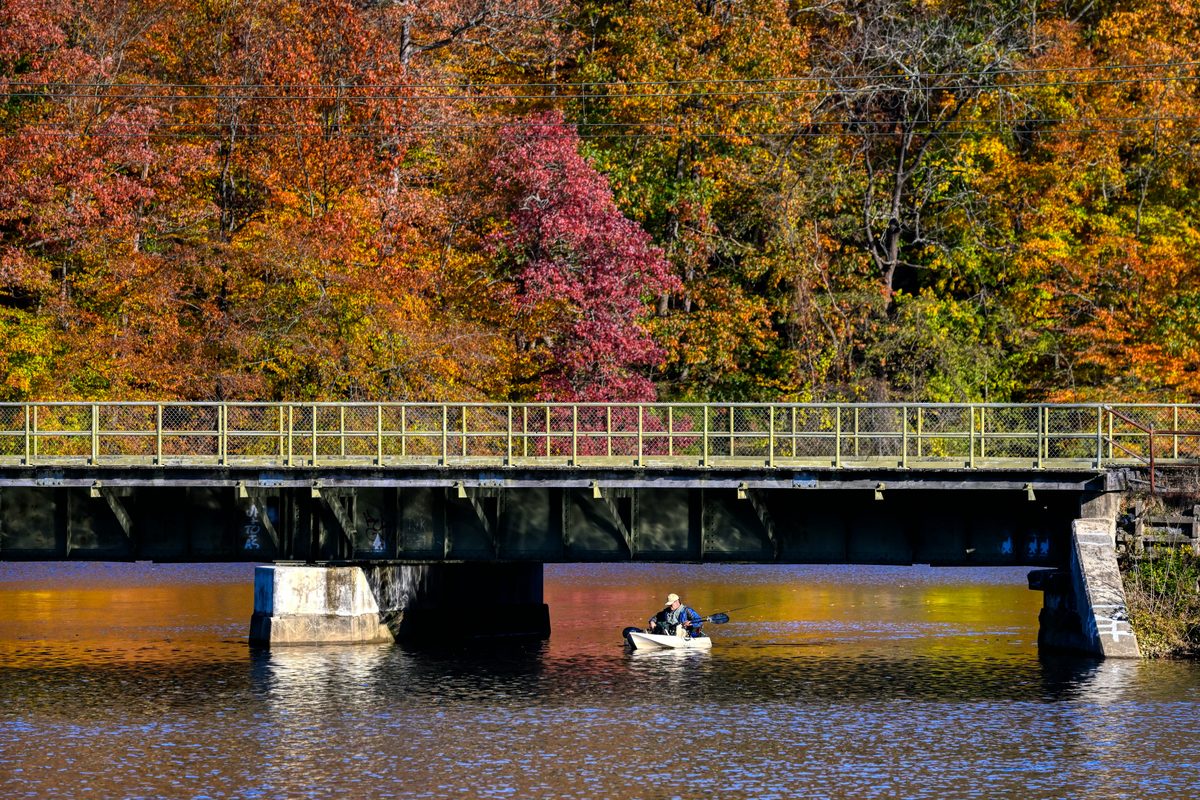
Oklahoma is one of the best states in the country for kayak fishing. Hundreds of public lakes, diverse species, and water you can access for free year-round. But Oklahoma kayak fishing has some specific quirks — afternoon thunderstorms that build fast, open reservoirs that turn choppy without warning, 105-degree July days on water with no shade — that catch newcomers off guard in ways that a generic kayak fishing guide won’t mention.
These are the 13 mistakes we see most often from first and second-year Oklahoma kayak anglers. Some are expensive. Some are dangerous. All of them are avoidable once you know what to watch for.
1. Ignoring Oklahoma’s Afternoon Wind
This is the number one avoidable bad day on Oklahoma water. On reservoirs like Grand Lake, Lake Eufaula, and Lake Texoma, the wind is often calm at sunrise and building by 10 a.m. By noon, you can have 15–20 mph sustained wind turning open water choppy and making a downwind paddle back to the ramp genuinely exhausting — or worse, dangerous on a sit-in kayak in whitecaps.
The fix: check wind forecasts the night before AND the morning of your trip. Windfinder.com and Windguru are more accurate than generic weather apps for on-water conditions. Plan your paddle-out so the wind is at your back on the way home, not in your face. On big reservoirs, stay within protected coves when the wind picks up rather than trying to cross open water.
2. Launching at a Boat Ramp on a Holiday Weekend Morning
Oklahoma’s popular reservoirs get serious boat traffic on holiday weekends — Memorial Day, Fourth of July, Labor Day. If you launch at the main public boat ramp at Grand Lake or Texoma at 7 a.m. on Memorial Day weekend, you’re sharing a narrow concrete ramp with bass boats, pontoons, and ski boats in a hurry. Kayaks take longer to unload and block the ramp, which creates conflict.
The fix: find secondary access points — bank fishing areas, undeveloped shoreline, or state park day-use areas where you can slide in without competing with the boat ramp line. ODWC lake pages list alternative access points for most major reservoirs.
3. Not Wearing a PFD (Because It’s Hot)
Oklahoma summers are brutal on open water. The temptation to leave the life jacket in the car when it’s 98°F and you’re wearing a sun shirt is real and understandable. It’s also the setup for the statistic that drowning victims are almost never found wearing a PFD.
The fix: buy a PFD you’ll actually wear — a low-profile inflatable belt pack or a thin foam vest designed for kayaking. The NRS Vapor and Stohlquist Fisherman are both breathable and comfortable enough that Oklahoma heat is no longer an excuse. If you wear it every trip, it becomes habit before you need it to be instinct.
4. Buying the Wrong Kayak for Oklahoma Water Types
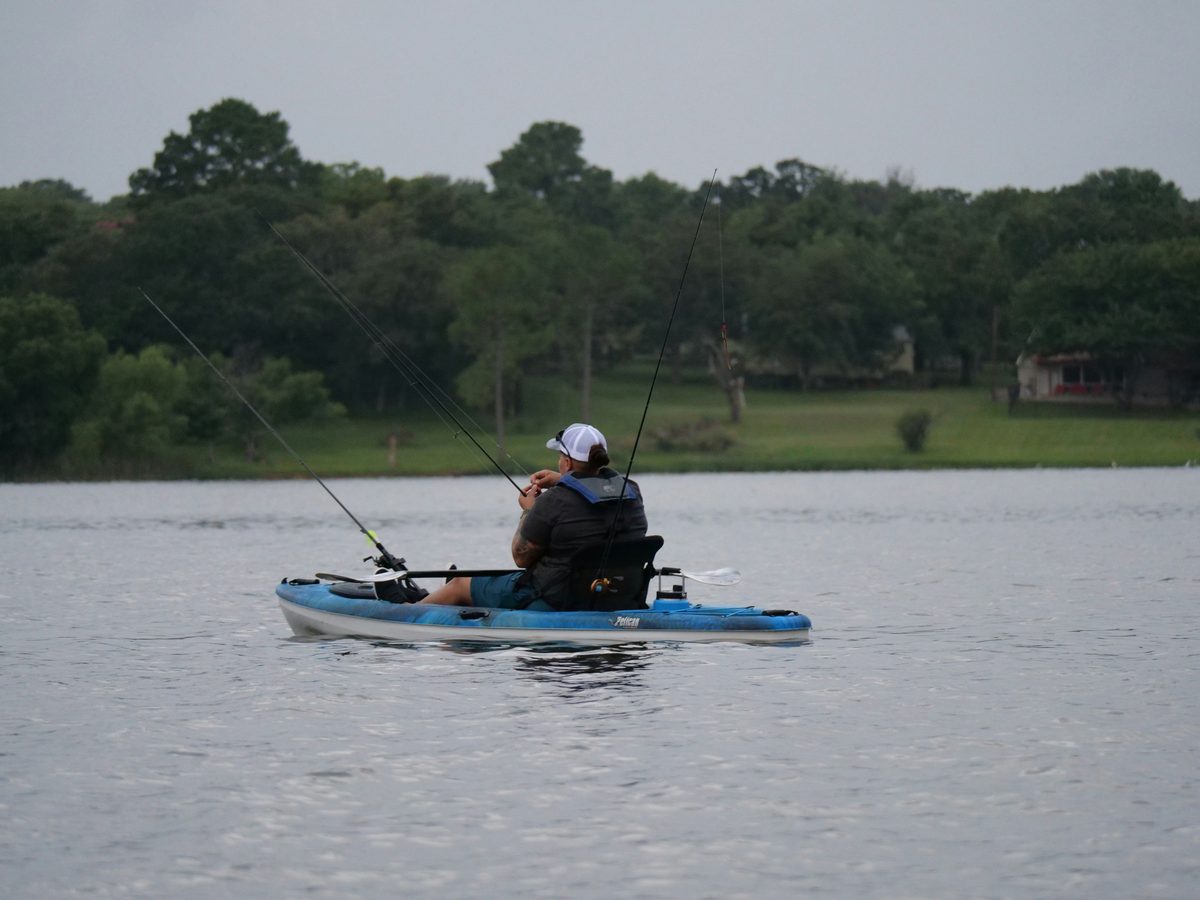
Oklahoma has three distinct water environments: small protected ponds and creek arms (calm, shallow), mid-size reservoirs like Thunderbird and Tenkiller (moderate wind exposure, some boat traffic), and massive open reservoirs like Eufaula, Texoma, and Grand Lake (significant wind, big chop, long paddle distances). A kayak sized for Thunderbird is underpowered for Eufaula. A kayak you can car-top easily might not have the stability you want when a bass boat wake hits at Grand Lake.
The fix: match the kayak to the water you’ll primarily fish. For Oklahoma’s big open reservoirs, 12-foot minimum with a wide beam (32 inches or more) gives you stability in chop and enough hull speed to make the paddle home not terrible. Sit-on-top kayaks are almost always the right call for Oklahoma summer heat and accidental capsizes in warm water.
5. Overpacking Before You Know What You Actually Need
The kayak fishing gear market is enormous and deeply persuasive. By the time a new angler has spent two months watching kayak fishing YouTube, they’ve convinced themselves they need a fish finder, rod holders, anchor trolley, crate, milk crate, tackle tray, camera mount, and two rod holders before ever sitting in the kayak. The result: an overloaded, top-heavy kayak that’s exhausting to paddle and unstable when you lean for a cast.
The fix: first three trips, bring only what you’d bring fishing from the bank — rod, tackle, water, life jacket. Add one piece of rigging per season as you learn what you actually miss. The things that matter most (rod holder, anchor system, paddle leash) become obvious fast. The things you bought first (fish finder on trip two) often stay in the garage.
6. Driving Three Hours to a Lake Without Checking the Report
Oklahoma anglers will drive two or three hours for a lake known for a specific bite. Eufaula for crappie. Broken Bow for bass on clear water. Keystone for white bass in spring. The ODWC publishes weekly fishing reports for every major lake that tell you exactly how the fishing has been — good, slow, what’s biting, what depth, what technique. Ignoring this and showing up on a slow week based on last summer’s trip is an expensive and frustrating way to learn.
The fix: bookmark wildlifedepartment.com/fishing/fishingreport and check it before any trip you’re driving more than 45 minutes to reach. The reports are updated weekly and written by the biologists who actually sample the lakes.
7. No Anchor System on Open Water
Kayaks drift. On Oklahoma’s windy reservoirs, they drift fast. If you’re trying to work a dock, drop, or crappie brush pile, constant drifting off your spot kills the presentation and wears you out repositioning. Many beginners discover this on their second or third trip and immediately wish they’d rigged an anchor before leaving the driveway.
The fix: an anchor trolley — a ring and line system that lets you set your anchor to the bow or stern to control how you face the wind — is the most important kayak rigging upgrade after a rod holder. A 3-lb folding grapnel anchor handles most Oklahoma lake bottoms. The whole system costs under $40 and transforms how precisely you can fish structure.
8. Neglecting Sun Protection on Oklahoma’s Open Reservoirs
Oklahoma has some of the most punishing summer sun in the country, and kayak fishing puts you directly in it for 4–8 hours at a time with water reflection amplifying the UV exposure. Sunburn severe enough to blister in a single trip is not uncommon among unprepared beginners. Heat exhaustion on the water — miles from the ramp — is a genuine medical emergency.
The fix: UPF 50 sun shirts, neck gaiter, brimmed hat, polarized sunglasses, and broad-spectrum SPF 50+ sunscreen reapplied every two hours. Carry more water than you think you need — at least 24 oz per hour in summer heat. Schedule your Oklahoma summer trips to be on the water by 6 a.m. and off by noon before the worst heat builds.
9. Fishing the Wrong Depth for the Season
Oklahoma’s fishing seasons have a clear pattern that experienced anglers follow instinctively: fish are shallow in spring spawn, push deep in summer heat, come back to mid-depths in fall, and drop to the deepest stable water in winter. New anglers who don’t know this pattern spend spring fishing deep structure (where fish aren’t) and summer fishing the shallows (where fish were six weeks ago).
The fix: the ODWC fishing reports tell you current depth and structure. A basic fish finder — even a budget Garmin Striker 4 — confirms whether there’s any life at the depth you’re fishing before you spend three hours working it. Adjust depth until you see activity on the screen, then work that water column.
10. Paddling a Cheap Flex-Shaft Paddle All Day
The paddle that comes with most entry-level kayak packages is functional for getting off the dock. For four hours of serious paddling on Oklahoma’s open reservoirs, a heavy aluminum-shaft paddle with plastic blades creates significant arm, shoulder, and wrist fatigue that a fiberglass or carbon shaft eliminates. Bad paddles don’t just make you tired — they contribute to repetitive strain injuries over a full season.
The fix: budget $80–$150 for a mid-grade fiberglass-shaft paddle as your first gear upgrade after safety essentials. The weight difference between a 35-oz aluminum paddle and a 22-oz fiberglass paddle adds up to thousands of ounce-miles saved over a full day on the water.
11. Going Solo on Big Water Without a Float Plan
Solo kayak fishing is one of the great freedoms of the sport. It’s also statistically the highest-risk scenario. On Eufaula (105,500 acres), Texoma (89,000 acres), or Grand Lake, a capsize, a medical event, or a swamped kayak in rough water is a serious situation if nobody knows where you launched, which cove you planned to fish, or when to expect you back.
The fix: text a float plan to someone before every trip — your launch ramp, the general area you’re fishing, and a time they should call for help if they haven’t heard from you. It takes 30 seconds. A handheld VHF radio or a Garmin inReach mini (satellite messenger) is worth the investment if you regularly fish Oklahoma’s biggest reservoirs alone.
12. Forgetting About Boat Traffic on Oklahoma’s Popular Lakes
Grand Lake, Texoma, and Lake Murray get heavy recreational boat traffic on summer weekends. A bass boat running at 60 mph 50 yards from you creates a wake that hits without warning. Kayaks are low and slow and often invisible to distracted boaters watching their electronics. This isn’t a hypothetical risk — kayak-boat collisions happen every season in Oklahoma.
The fix: wear bright colors or add a kayak safety flag to your stern. Stay inside protected coves and shoreline structure rather than crossing open water channels during peak traffic hours (10 a.m.–4 p.m. on summer weekends). Make yourself visible. If a bass boat is approaching and you’re not sure they see you, wave a paddle above your head.
13. Not Knowing Oklahoma’s Trolling Motor Registration Requirement
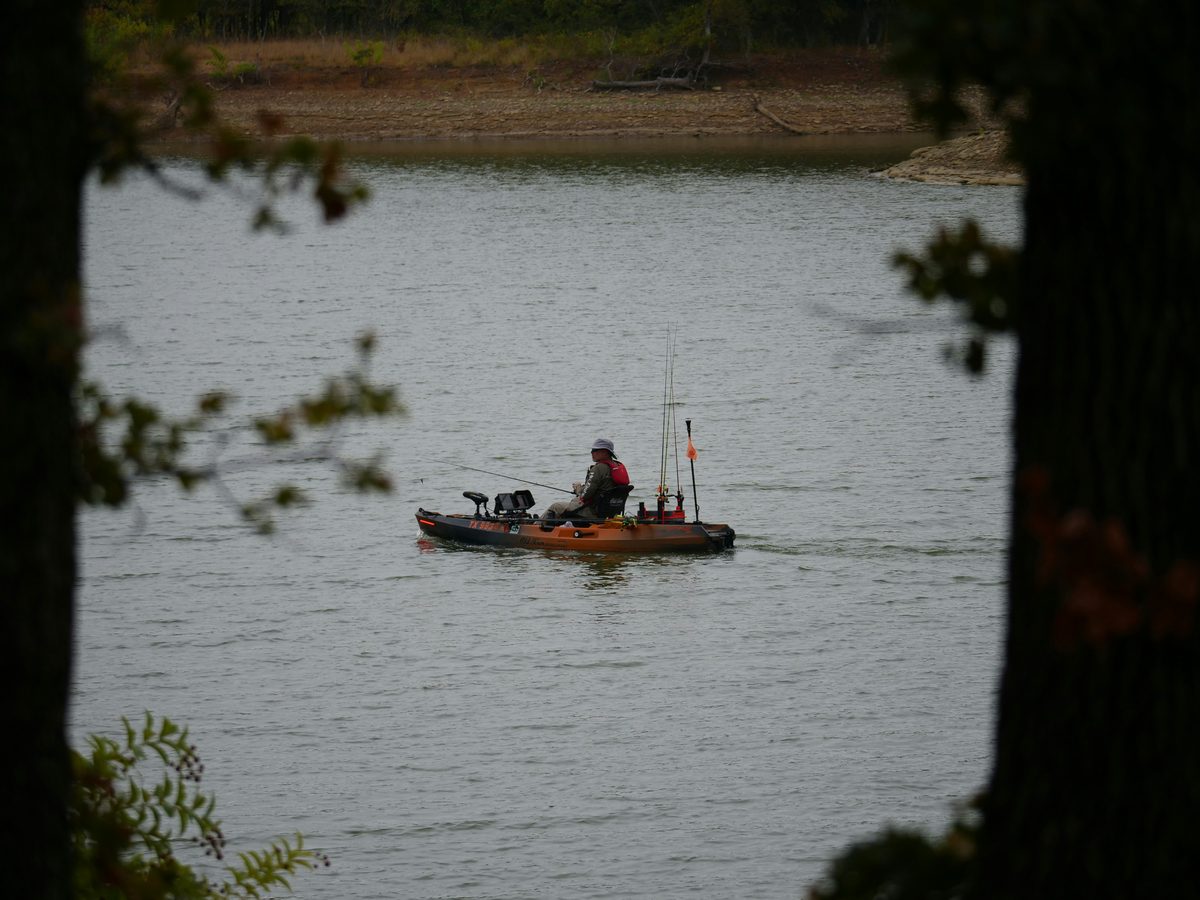
A surprising number of Oklahoma kayak anglers add a trolling motor and don’t realize they’ve just created a legal obligation. Under Oklahoma law, any kayak with a trolling motor — even a small 30 lb thrust electric — must be titled and registered as a motorized vessel with the Oklahoma Tax Commission. Operating without registration is a citation offense on any Oklahoma state water.
The fix: if you’re adding a motor, register the kayak first. The process is handled at any Oklahoma tag agency, requires proof of ownership and a small fee, and takes about 20 minutes. See our full guide: Do You Need to Register a Kayak with a Trolling Motor in Oklahoma?
Gear That Fixes the Biggest Mistakes
NRS Vapor PFD — Wearable in Oklahoma Heat
A thin, highly breathable foam life jacket designed specifically for kayak anglers. Low-profile back panel works with kayak seat backs. The PFD you’ll actually wear when it’s 95°F on Grand Lake.
Browse Kayak PFDs on AmazonKayak Anchor Trolley Kit
Solves the drifting problem permanently. A trolley ring + line system lets you position your anchor at bow or stern to control wind exposure. 3-lb folding grapnel anchor handles Oklahoma lake bottoms. Under $40 total for the system.
Browse Anchor Trolley KitsFiberglass Kayak Paddle — 220cm or 230cm
The upgrade that makes the biggest single-trip difference. A 22-oz fiberglass paddle vs. a 35-oz aluminum paddle is felt immediately on long paddle-outs. Aqua-Bound Manta Ray Carbon and Werner Skagit FG are the community’s go-to mid-range picks.
Browse Fiberglass Kayak PaddlesGarmin Striker 4 Fish Finder — Budget Pick
At $99–$129, the Striker 4 with Dual-Beam transducer tells you whether fish are at your depth before you waste time working empty water. The first fish finder that pays for itself in a single redirect to productive depth.
Browse Garmin Striker 4 on AmazonFrequently Asked Questions
Just getting started? Our best fishing kayaks for beginners guide covers the top boats for every budget.