
Some links in this article are affiliate links. If you make a purchase through them, we may earn a small commission at no extra cost to you. This helps support the site. Learn more.
Guide last updated: May 5, 2026
If you’ve ever tried to hold position on a windy stretch of Lake Eufaula or work a current seam on the Neosho River feeding Grand Lake, you already know the truth: anchoring a kayak looks dead simple until you’re actually out there spinning sideways and watching your spot drift away. Oklahoma anglers deal with some of the most demanding anchoring conditions around — stiff south winds that turn Texoma into a washing machine, Grand Lake current that can sweep a yak downstream between casts, and shallow creek arms where a traditional boat anchor would spook every bass in sight. Getting your anchor system dialed in is the difference between a frustrating morning of fighting the yak and an afternoon of hands-free fishing with your bait exactly where you want it.
The good news is that the kayak fishing community has largely figured this out. The YakAttack LeverLoc Anchor Trolley system shows up on rig tours from Grand Lake to Murray to Tenkiller — it’s become the standard-issue setup for serious Oklahoma kayak anglers. Paired with the right grapnel anchor, you’ve got a system that deploys in seconds, holds position in moving water, and doesn’t require you to drill a bunch of holes in a hull you paid good money for. This guide breaks down the best anchor systems for 2026, shows you how to rig everything up, and covers the specific scenarios you’ll face on Oklahoma water.
The internet makes kayak anchoring look easier than it is. Videos show guys dropping anchor and instantly locking into position, but they don’t show the 20 minutes of rigging they did beforehand or the 45-degree current angle they had to account for. A proper anchor trolley system — where you run a loop of line along the side of the yak and can slide your anchor point from bow to stern — is what actually makes hands-free fishing work. You adjust the angle so the kayak weathervanes naturally into the current or wind, and suddenly the whole system makes sense. Without a trolley, you’re just dragging anchor off a cleat and hoping for the best.
2026 Kayak Anchor System Comparison
| Product | Type | Price | Rating | Best For |
|---|---|---|---|---|
| YakAttack LeverLoc Anchor Trolley | Trolley System | $36.95 | 4.7★ (724 reviews) | All-around trolley rigging |
| Extreme Max BoatTector 3.5lb Kit | Grapnel Anchor Kit | $24.31 | 4.6★ (4,722 reviews) | Current & rocky bottoms |
| Gradient Fitness 3.5lb Folding Anchor | Folding Grapnel Kit | $29.99 | 4.5★ (1,200+ reviews) | Compact storage, sandy/muddy bottoms |
| MOOCY Drift Sock / Sea Anchor | Drift Sock | $22.99 | 4.4★ | Big water drift fishing, Eufaula wind |
YakAttack LeverLoc Anchor Trolley Kit — Best Anchor Trolley Overall
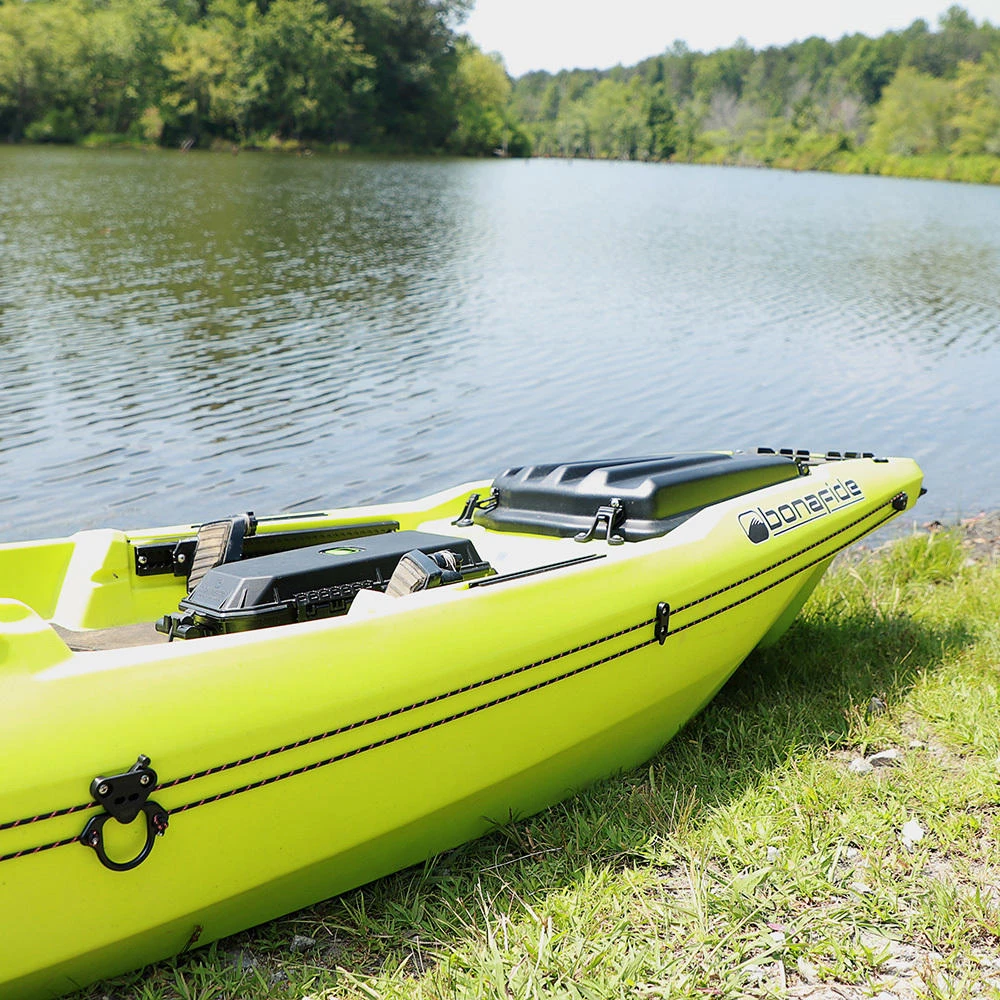
ASIN: B01CQBSTQC | Price: $36.95 | Rating: 4.7★ (724 reviews)
The LeverLoc is the anchor trolley that the kayak fishing community actually settled on, and it’s not hard to see why. The system runs 35 feet of USA-made 550 paracord with a highly reflective tracer down the length of your yak, threading through two low-profile Stealth Pulleys at each end. The LeverLoc line clamp is the key piece — a simple lever flip locks the trolley ring exactly where you want it, so you can reposition your anchor point in two seconds without taking your hands off a rod or fumbling with a jam cleat. The PadHook keeps the paracord running flat against the hull instead of flopping over your gunwale where it can snag gear or interfere with a paddle stroke.
For Oklahoma anglers fishing Grand Lake’s Elk River arm or the Neosho channel, being able to quickly shift that anchor point bow-to-stern as current direction changes is huge. You’ll be rigged and repositioned before a boat angler even gets the trolling motor pointed. Installation is straightforward — all hardware is included, and the paracord comes pre-cut and ready to thread. Made in the USA and backed by YakAttack’s Built for Life Guarantee.
- 35′ reflective USA-made 550 paracord
- LeverLoc flip-lever line clamp
- Two YakAttack Stealth Pulleys
- PadHook keeps lines off gunwale
- All installation hardware included
- Made in the USA — Built for Life Guarantee
Extreme Max BoatTector 3.5lb Grapnel Anchor Kit — Amazon’s Choice
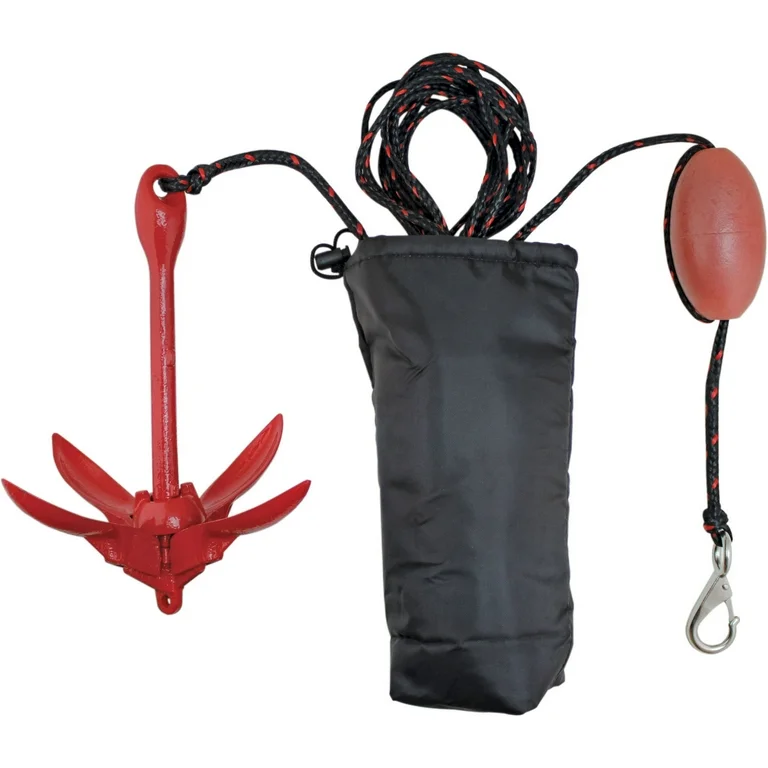
ASIN: B014HEW4V2 | Price: $24.31 | Rating: 4.6★ (4,722 reviews) — Amazon’s Choice
With over 4,700 reviews and Amazon’s Choice status, the Extreme Max BoatTector kit is the anchor that most Oklahoma kayak anglers pair with their trolley system — and it shows up on six different lake guides on this site for good reason. The 3.5-pound grapnel head is the right weight for most kayak anchoring situations: heavy enough to dig in and hold on rocky Grand Lake flats or current seams, light enough that you’re not straining to pull it back up one-handed. The folding flukes collapse flat for storage so you’re not gouging holes in the hull of your yak while you paddle to the spot.
The complete kit includes 40 feet of anchor rope with a clip, so you can pair it directly with your LeverLoc trolley ring and be fishing within five minutes of rigging. Vinyl coating on the flukes protects both your hull and the yak’s interior surfaces. Anglers who fish the rocky, riprap-heavy banks of Lake Murray and Tenkiller report this anchor sets quickly and doesn’t get permanently wedged in rock crevices the way cheaper grapnel designs can.
- 3.5lb grapnel-style folding anchor
- Vinyl-coated flukes — hull safe
- 40′ anchor rope with clip included
- Folds flat for kayak storage
- Rated for kayaks, PWC, paddle boards
- 4,722 Amazon reviews — Amazon’s Choice
Gradient Fitness 3.5lb Folding Anchor Kit — Best Compact Option
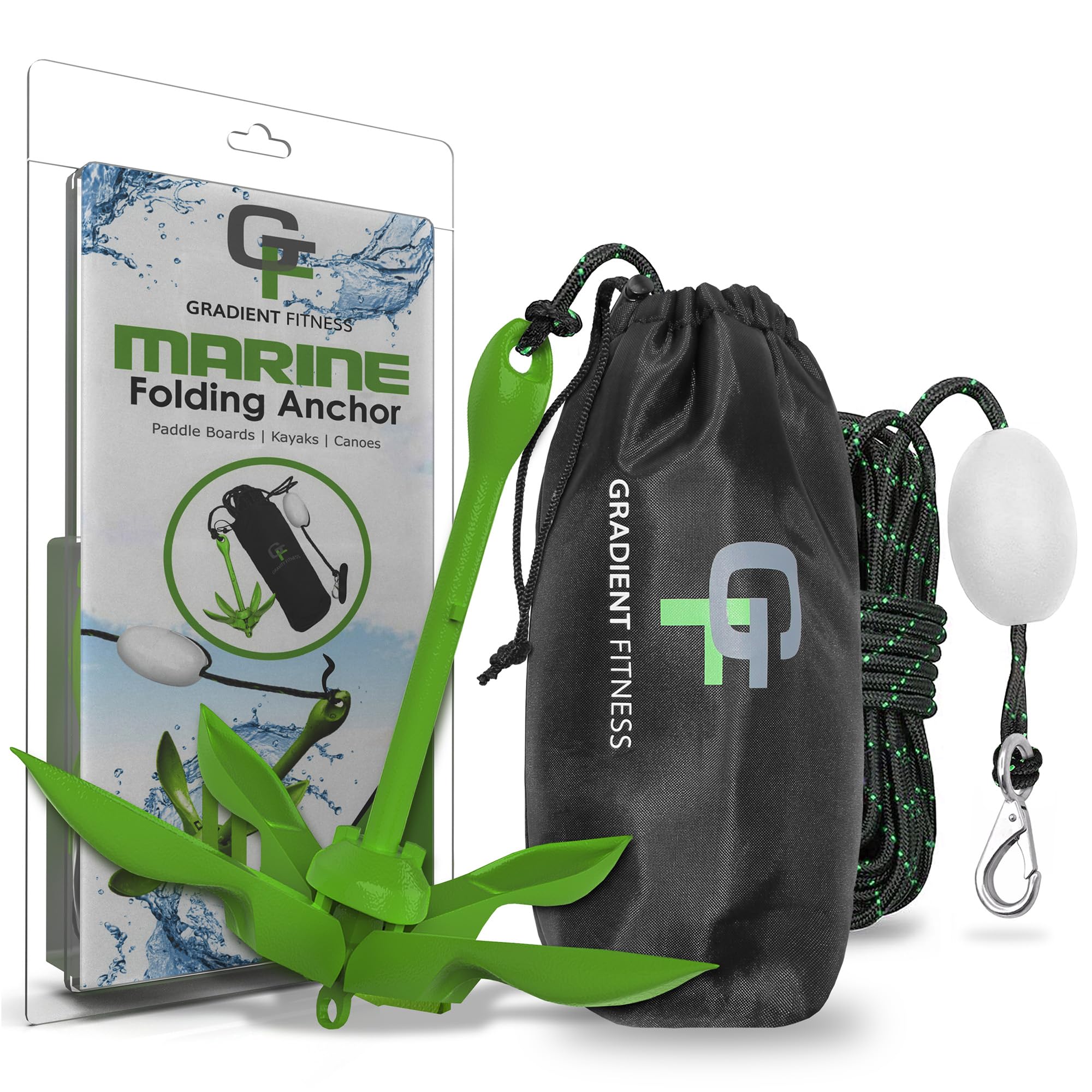
ASIN: B0751D77M2 | Price: $29.99 | Rating: 4.5★
If you want an anchor that disappears into a hatch when you’re done, the Gradient Fitness kit is worth a look. The 4-fluke design folds down to 12″ x 3″ and slips into a padded drawstring storage bag that keeps the anchor from banging around and scratching your yak’s interior. It’s the same 3.5-pound class as the Extreme Max but comes with 25 feet of 7mm marine-grade rope, a stainless steel snap hook, and a PVC flotation buoy that keeps the anchor visible if you’re dropping it in murky Oklahoma water.
This one shines on sandy or muddy bottoms — think the shallow creek arms off Eufaula or the grass flats you find tucked in the back of Grand Lake coves. It’s also a solid pick for anglers who float smaller water and want an anchor that stows cleanly on a day hike to a remote creek. The padded bag is a nice touch that the Extreme Max kit doesn’t offer.
- 3.5lb 4-fluke folding anchor
- Folds to 12″x3″ — fits in any hatch
- 25′ marine-grade rope + stainless snap hook
- PVC buoy included
- Padded storage bag
- Rust-resistant construction
MOOCY Drift Sock / Sea Anchor — Best for Big Water Drift Fishing
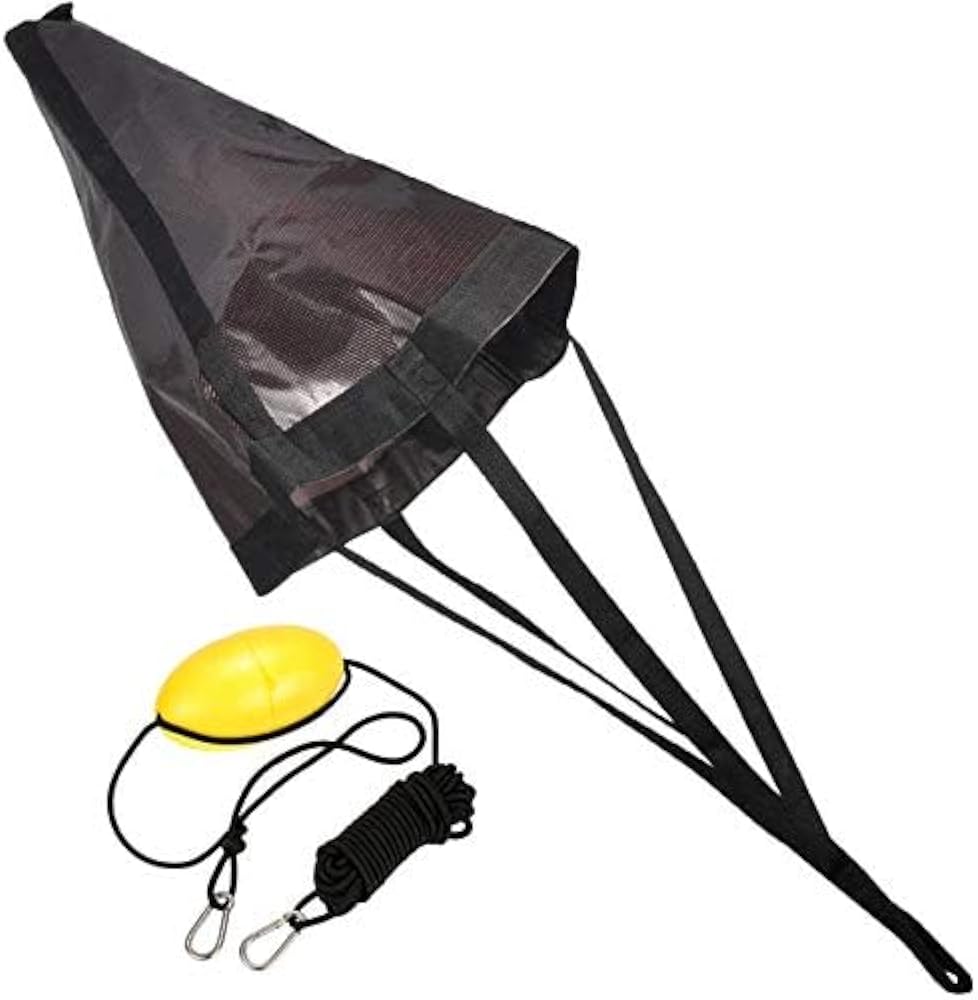
ASIN: B09PG21WX5 | Price: ~$22.99 | Rating: 4.4★
There are days on Texoma or Eufaula when the wind is blowing 20 mph and you don’t want to anchor — you want to drift, but at a controlled speed where you can actually work a jig or drag a Carolina rig along the bottom. That’s where a drift sock earns its keep on the yak. This parachute-style sea anchor deploys off the bow or stern, creates drag in the water, and slows your drift to a fishable pace without stopping you completely. You end up drifting with the wind instead of getting blasted sideways, and your bait tracks naturally along the bottom the whole time.
The 24-inch version is sized right for a solo kayak. Rig it through your anchor trolley ring for even more control over drift angle — pull it toward the stern and you’ll drift bow-first into the wind, which keeps you facing the water you’re fishing. A drift sock is the piece of gear most anglers don’t know they need until the first time 15 mph of south wind turns a planned crappie session into a survival paddle.
- Parachute drift sock for controlled drift
- Slows drift speed in wind & current
- Use through anchor trolley for angle control
- Multiple sizes: 24″, 32″, 42″
- Compact, packs flat in a bag
- Works alongside or instead of hard anchor
How to Rig an Anchor Trolley System
What You Need
To build a basic anchor trolley setup you need: the YakAttack LeverLoc kit (or similar), a grapnel anchor (3.5lb is the sweet spot for most kayaks), and 40–50 feet of anchor rope with a clip. Most anglers also add a carabiner or anchor rope float so the anchor is visible when it’s down. A small cleat or dedicated anchor rope keeper on deck helps you manage slack line while you’re fishing. The LeverLoc kit comes with everything for the trolley itself — you just need to source the anchor and line separately.
Installation Basics
The trolley runs along one side of the yak from bow to stern. Mount the two Stealth Pulleys at the bow and stern using the included hardware — most yaks have factory mounting points, or you can use the included screw kit in suitable locations. Thread the paracord through both pulleys to form a continuous loop, then attach the LeverLoc clamp to the loop at the midpoint. Tie your anchor ring onto the paracord loop at one end of the LeverLoc. The whole install takes about 45 minutes the first time. When you’re done, the ring slides smoothly from bow to stern and the LeverLoc lever locks it in place wherever you want.
Using It on Oklahoma Water
Once you’re rigged, deployment is simple: slide the anchor ring to the bow or stern depending on conditions (more on this in the next section), clip your anchor line to the ring, drop the anchor, pay out line, then lock the LeverLoc lever. The yak will weathervane naturally so the bow or stern points into the current or wind. To reposition angle, just unlock the lever, slide the ring, and re-lock — takes about three seconds. To retrieve, unlock, pull your anchor line hand over hand, and re-clip to a cleat or bungee on deck.
Oklahoma Anchoring Scenarios
Current on Grand Lake and the Neosho River
Current is your main challenge on Grand Lake, especially in the Elk River arm and anywhere the Neosho feeds in above the main lake. In moving water, deploy your anchor toward the bow and let the yak swing on a shorter scope — in current you don’t need as much scope as you would in open water. Keep the anchor line at roughly a 45-degree angle to the bottom for the best holding. If you’re fishing a seam where fast water meets slow water, position the anchor on the fast-water side so the yak holds stable rather than spinning. The LeverLoc lets you fine-tune that angle in real time as current pulses.
Wind on Eufaula and Texoma
Lake Eufaula and Texoma both get hammered by Oklahoma’s south wind, sometimes before noon. In wind, move the trolley ring toward the stern — this puts your weight and profile into the wind correctly and keeps the bow from diving into wave sets. On days with 15+ mph wind, consider more scope (more line out) to let the anchor set deeper and get a better bite. If conditions make a hard anchor impractical, swap to the drift sock and work with the wind instead of fighting it. The combination of a trolley system and a drift sock gives you options on whatever the weather throws at you.
Shallow Flats and Creek Arms
In water under four feet — common in the back of Grand Lake coves or the upper arms of Tenkiller — you don’t always need a hard anchor at all. A stake-out pole pushed into a muddy or sandy bottom holds the yak in place silently, with no splash or chain rattle to spook fish. YakAttack makes a ParkNPole for exactly this situation. For slightly deeper flats, the Gradient Fitness folding anchor with its 4-fluke design digs into sand and mud efficiently at lower weights. In creek arms with light current, you can often anchor with just 20–25 feet of line and hold perfectly.
Frequently Asked Questions
A 3 to 3.5 pound grapnel anchor is the right size for most fishing kayaks in Oklahoma conditions. It’s heavy enough to hold in current and moderate wind, but light enough to retrieve one-handed without throwing off your balance in the yak. Go heavier (4–5lb) only if you’re regularly fishing heavy current or open water with sustained wind above 20 mph.
You can anchor off the bow in calm conditions, but an anchor trolley is worth every penny once you start fishing in current or wind. Without a trolley, the yak either points straight into the current (uncomfortable) or gets dragged sideways (dangerous in wind). A trolley lets you dial in the angle so the kayak sits naturally and you can fish comfortably. It’s the single upgrade that most experienced kayak anglers say made the biggest difference in their fishing.
Not if you use the right gear. Vinyl-coated grapnel anchors like the Extreme Max BoatTector won’t scratch interior surfaces, and a padded storage bag (included with the Gradient Fitness kit) protects the hull when the anchor is stowed. Use a rope float or buoy between the anchor and your trolley ring to prevent the metal hardware from dragging along the hull. The YakAttack LeverLoc system installs with hardware that won’t compromise hull integrity on most production kayaks.
40 to 50 feet covers most Oklahoma kayak anchoring situations. The general rule is 5:1 scope — five feet of rope for every foot of water depth — but kayaks are light enough that you can often get away with 3:1 in calm conditions. In current, shorter scope gives you more control. Most complete kits come with 25–40 feet, which is adequate for water up to 10 feet deep. If you plan to fish deeper main lake channels, spool up a second anchor rope on a small reel.
Yes, and it’s a great combination for big water drift fishing. Run the drift sock line through your anchor trolley ring the same way you would a hard anchor. Sliding the trolley ring lets you control drift angle — ring toward the stern = bow-first drift into the wind, which is usually the most fishable orientation. On days when Texoma or Eufaula are too windy to anchor but too rough to ignore, a drift sock through a trolley system lets you cover water at a controlled pace without fighting the yak every minute.
Related Guides
Just getting started? Our best fishing kayaks for beginners guide breaks down the top boats for every budget and fishing style.